February Newsletter 
Calendar of Events
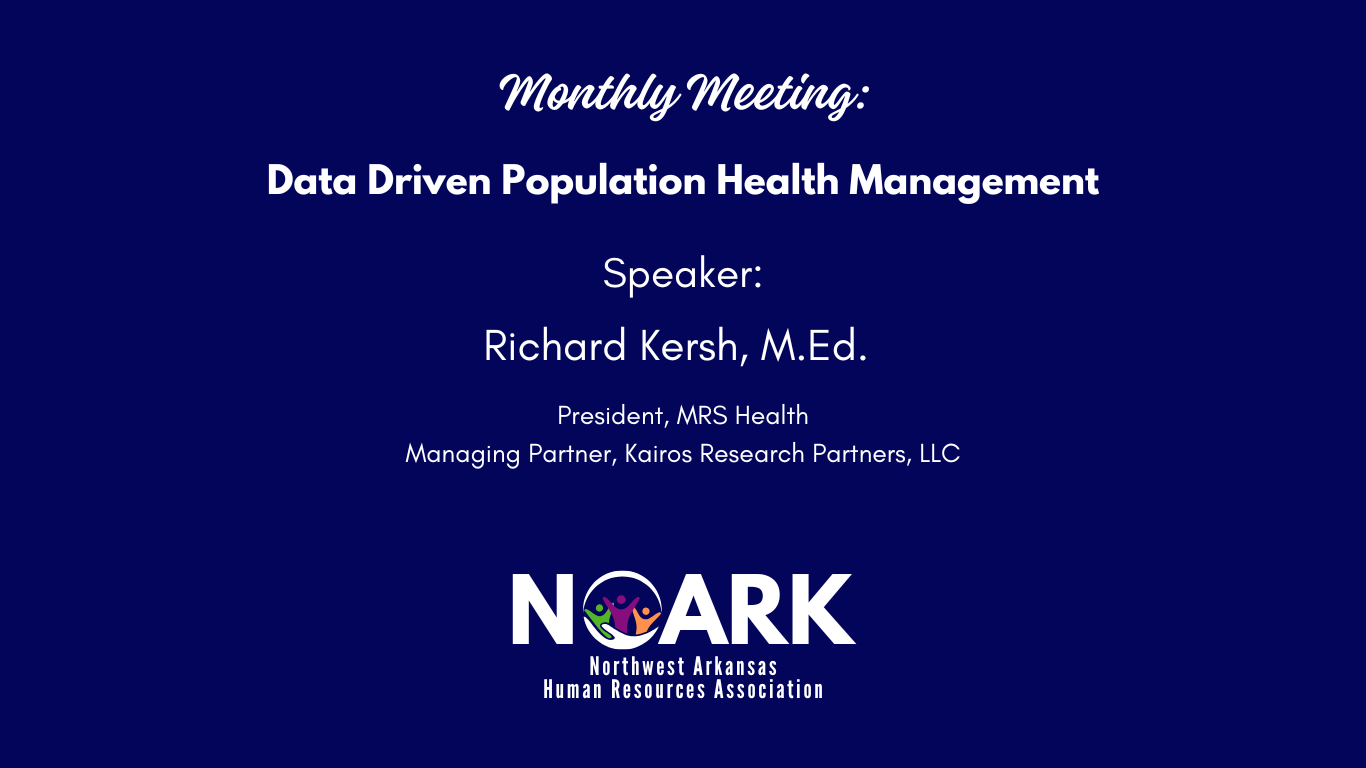
Registration is now open!
Data-Driven Population Health Management
Membership

JOIN SHRM + LOCAL CHAPTER!
Benefits of SHRM Membership
- Personalized Content
- Legislative Resources & Updates
- Member Community
- Free Webcasts
- Discounts on SHRM Events and Educational Offerings
- Thousands of HR-Related Resources and More!
Benefits of NOARK Chapter Membership
- Network with local HR professionals
- Gain insights on HR best practices
- Discover local career advancement opportunities
- Earn PDC's for SHRM-CP or SHRM-SCP recertification
NOTE: Chapter membership expires at the same time as your current SHRM membership, regardless of enrollment date. Any applicable Chapter dues will be prorated based on the number of months remaining on your current SHRM membership.
*NOARK is a 100% membership chapter, which means you must also be a member of the national SHRM organization (www.shrm.org).
Inclusivity Committee
Navigating DEI Challenges: Insights on Fostering Inclusivity in the Workforce
Alie Streeter
Inclusivity Committee Chair
Matt McGowan is the Director of Social Impact at Staffmark Group, where he combines his passion for talent acquisition with a commitment to fostering a culture of excellence. He actively connects skilled professionals to opportunities that align with their strengths and career goals.
Matt’s focus on collaboration, diversity, and inclusion ensures a staffing experience that benefits clients and candidates. He continuously seeks to improve processes and achieve great results by leveraging data-driven insights.
Staffmark Group has recently announced its continued commitment to inclusivity, and Matt is sharing key insights on how others can do the same.
Matt was interviewed by Alie Streeter, NOARK’s Inclusivity Chair and an Account Executive at Staffmark.
What unique challenges do you see for HR professionals as corporations make changes to their Diversity, Equity, and Inclusion (DEI) policies in response to legislative changes?
Matt: HR leaders must be prepared to address concerns from employees and stakeholders who may perceive these shifts as a step backward for DEI efforts.
To navigate this, it’s crucial to ensure that DEI initiatives are seen not as mere compliance measures but as core to the organization’s values and mission. There is still significant work to be done in educating people about what DEI truly represents. Many misunderstand it, fearing that it’s about taking opportunities away from some rather than ensuring everyone has a fair chance to succeed.
The focus should be on the value of expanding opportunities and how creating more seats at the table benefits everyone. By emphasizing how inclusion drives innovation, growth, and collaboration, organizations can reframe the conversation and reinforce the importance of DEI as a driver of long-term success.
How can companies effectively communicate their DEI goals without alienating stakeholders with differing views?
Matt: It’s essential for people to see how DEI aligns with the mission of the business and connects to the work employees are doing every day. Sharing stories is key to building that understanding. At Staffmark Group, we are developing case studies to highlight how DEI programs positively impact employee engagement and retention. This will help us demonstrate the tangible value these initiatives bring to an organization and begin to educate those who may not fully understand what DEI represents.
These case studies will serve a dual purpose: educating our clients and our internal employees. They will illustrate the importance of feeling represented and being an integral part of an organization’s mission. By showcasing the value of inclusion, we can inspire others and, in the process, change perceptions and open minds.
From my experience in the Army, I can confidently say there’s no better example of the power of strong DEI programs. The U.S. military, the most diverse organization in the world, achieves unparalleled excellence because it unites people from a wide range of backgrounds, cultures, and perspectives in pursuit of a shared mission. This is a powerful example of a DEI success story that people can relate to, understand, and embrace; a perfect example of how diversity drives strength and success.
How can organizations tailor their DEI initiatives to appeal to more restrictive policies while still promoting inclusivity?
Matt: Integrating DEI goals with broader organizational objectives is essential for creating meaningful impact. When examining groups facing barriers to employment, we often find significant overlap. For example, our company’s second chance hiring initiative addresses this challenge directly. Many of our clients struggle to find talent, and fair chance hiring not only opens up a new pipeline of candidates but also reflects the diversity of the broader population, including individuals from other underrepresented groups.
To demonstrate the value of these untapped talent pools, we must show how their inclusion helps solve the talent shortages our clients face. These programs are a win-win; they address hiring challenges while fostering greater inclusion and diversity across the organization.
Recently, I spoke with a member of our Interfaith Alliance Business Resource Group (BRG) who wanted to enhance member engagement. We discussed encouraging members to connect with faith-based organizations that support second-chance and fair-chance candidates, building a network of community partners to strengthen our initiative.
This approach not only advances our second chance hiring goals but also reignites the sense of mission that inspired BRG members to join in the first place. By aligning these efforts with business objectives, we create a sense of purpose that drives success for individuals, the company, and the communities we serve. It’s a strategy that benefits everyone.
What metrics should HR professionals focus on to assess the effectiveness of their DEI initiatives while maintaining compliance with strict policies that aim to reduce previous DEI measures?
Matt: Employee retention rates, engagement scores, and pay equity are key metrics for evaluating the effectiveness of DEI programs. These measures provide clear, tangible evidence of the value such programs bring, even for those who may initially be skeptical.
Even organizations resistant to DEI efforts recognize the importance of retaining talent, fostering engagement, and ensuring pay equity. By clearly demonstrating how DEI initiatives drive improvements in these areas, we can encourage more stakeholders to reconsider any plans to scale back these efforts. Linking DEI programs directly to measurable success in these critical areas can shift perspectives and build broader support.
Based on your experience, how do you imagine the future of DEI over the next few years?
Matt: While the headlines seem to suggest that DEI programs are on the way out, anyone paying attention knows this is not the case; but they are changing. While challenges lie ahead, focusing on the business case will ultimately demonstrate the value of the programs. As we navigate legislative hurdles and shifting societal perceptions, we have a unique opportunity to sharpen our strategies, rely on the metrics, and demonstrate the benefits of a diverse workforce in driving innovation and success.
I’m confident that, through this process, more people will come to recognize the value of DEI programs than ever before. It won’t be easy, but there’s a renewed energy in this space. People are ready to dig in, showcase the measurable impact of these initiatives, and share stories that highlight their importance to the business. By doing so, we can reach those who might not yet see how DEI efforts benefit everyone, including themselves.
What lessons can organizations learn from DEI initiatives that have failed in the past? How can they adapt moving forward?
Matt: The reasons for an initiative's failure often determine the lessons we can learn. Many initiatives fail because they come across as inauthentic or as mere tokenism. To succeed, we must clearly articulate the value of these efforts to our audience. It’s essential to tell a compelling story about their impact and not assume that others will see the value the same way we do, even if it seems obvious to us.
Being proactive is key; demonstrating how these programs deliver tangible value. DEI isn’t just about feeling good, it’s about driving business success. Customers want to engage with companies that reflect their identities and share their values. While many people view things from a self-focused perspective and struggle to empathize, HR leaders have a responsibility to bridge that gap. We need to help others understand how DEI initiatives benefit them personally and professionally.
I think Staffmark Group does a very good job of tying DEI efforts to business success. This is why we use the term Business Resource Groups (BRGs) instead of Employee Resource Groups (ERGs)—to emphasize their connection to the company’s mission and outcomes.
How do legal and compliance considerations affect the implementation of DEI initiatives in 2025?
Matt: This space is evolving rapidly. The Supreme Court’s decision on Affirmative Action in colleges has led many private organizations to reassess their DEI programs. While some portray this as companies abandoning DEI, the reality is that many are refining these programs to align more closely with their business models. Changes in the government sector don’t diminish the value of DEI in the private sector.
Organizations need to focus on understanding what truly impacts them amid legislative shifts. What matters most to your customers and employees? What drives retention, engagement, and meaningful connections with your stakeholders? These are the questions that should guide your approach.
It’s also crucial to take a step back and look at the bigger picture. Our country is becoming more diverse in many ways, presenting an opportunity to demonstrate how DEI impacts individuals directly, as well as those they care about. By addressing these connections, organizations can show the tangible value of these efforts to their communities and stakeholders.
Legislative
Navigating Workplace Uncertainty in a Changing Legislative Climate
As HR professionals, we are no strangers to change, but the current landscape presents unique challenges. With President Trump’s administration implementing significant policy shifts, workplace regulations are evolving rapidly. From executive orders impacting affirmative action and DEI policies to proposed changes in labor laws and tax policies, these shifts create uncertainty for both employers and employees.
One of the most pressing concerns is the heightened stress among employees as they navigate these changes. Concerns about job security, compliance expectations, and workplace rights are at an all-time high. As HR leaders, we play a critical role in helping organizations stay informed while supporting employees through these transitions.
Key Ways HR Can Provide Stability
- Stay Informed & Communicate Clearly – Regularly update leadership and employees on policy changes that may affect the workplace. Transparency builds trust and reduces uncertainty.
- Prioritize Employee Well-Being – Acknowledge the stress that policy changes bring and provide mental health resources, open forums, and leadership support. Utilize your employers EAP for employees to support them during this challenging times.
- Review Workplace Policies – Ensure compliance with new regulations and adapt HR strategies accordingly. This includes pay equity, leave policies, and diversity initiatives.
- Advocate for Employees – Engage in legislative discussions, connect with state SHRM advocacy efforts, and ensure employee concerns are heard at all levels.
HR professionals serve as the bridge between policy changes and workplace impact. Now more than ever, it’s essential to stay engaged, informed, and proactive. Let’s work together to lead with confidence and compassion during this period of transition.
Thank you, and I look forward to providing legislative resources.
Tina Gilbert
Legislative Chair, NOARK
February Recap
February 13, 2025’s NOARK Meeting welcomed an interactive speaker and panelist discussion regarding, “Positive Workplace Culture With Satisfied Productive Employees.” NOARK is happy to host a welcoming and inclusive learning space for thirty-five attendees this month. Thank you for your participation and we hope to see you at future meetings, educational and networking events.
For those who were not able to attend NOARK’s February meeting and workshop, my name is Sarah. I am your NOARK Secretary, and here is a review of February’s meeting and learning lab.
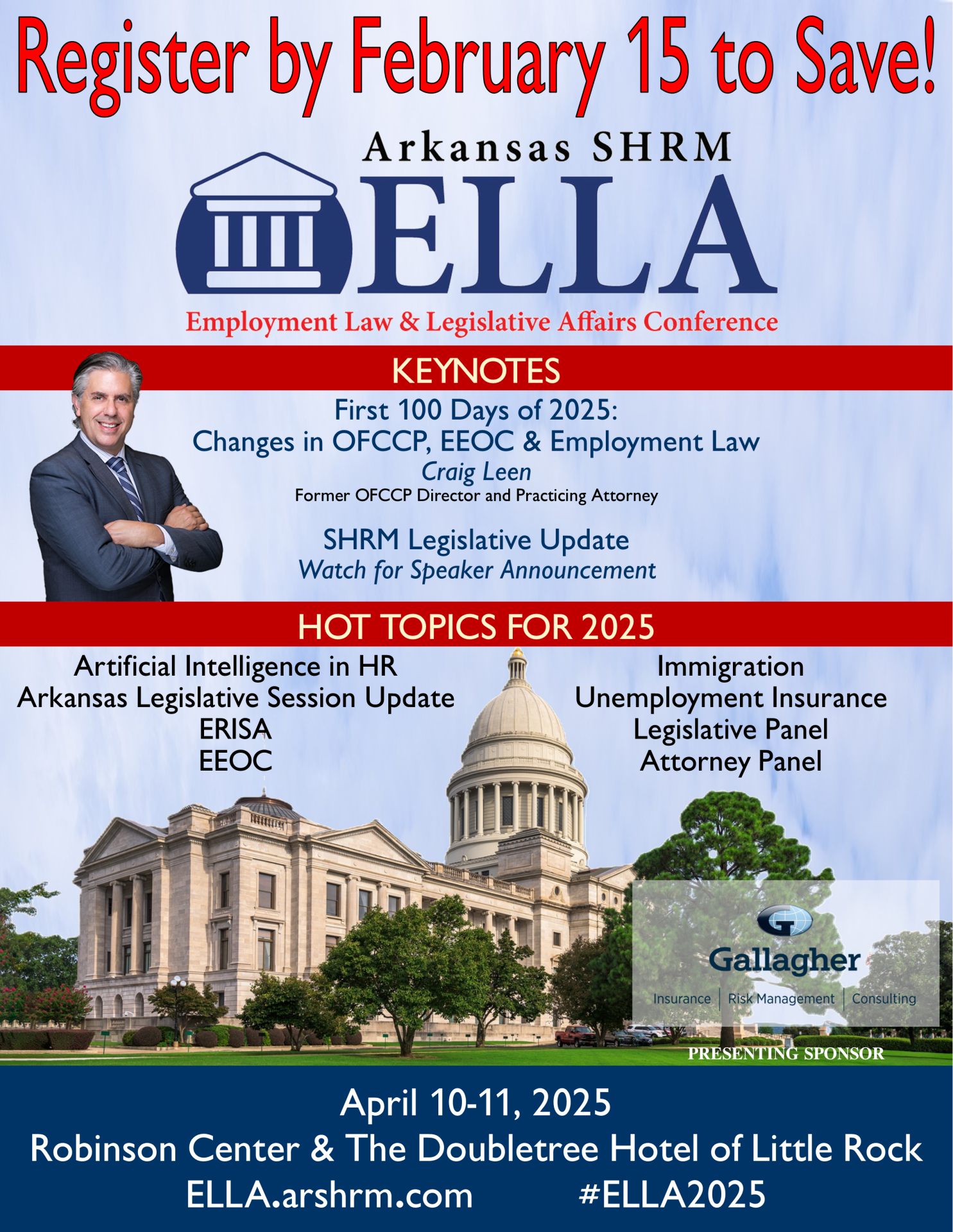
NOARK’s February meeting began with NOARK President Mandi Ragsdale’s announcements during lunch. Announcements included a reminder for early bird registration for the ELLA Conference taking place in Little Rock this April. Please remember when attending a meeting that if you have not had a chance to register see NOARK Treasurer Zach Robinson when you arrive. NOARK would like to remind members that we are now a DMR, also known as a Dual Membership Chapter with SHRM. When you renew your SHRM, you can renew with your local chapter at the same time. NOARK After Dark, a networking event, will occur on February 26 between 5:30 pm – 6:30 pm, please join us for networking and appetizers, see NOARK website for more details. At NOARK’s March 13th meeting Richard Kersh will join us as we learn about, “Analytics for Wellness Programs.” In March we will also have our very own Vice President of NOARK and, “I-9 Lady,” Sheila Moss hosting a learning lab surrounding the world of I-9 compliance. NOARK President Mandi concluded announcements asking if anyone in attendance was a new certification, which at this meeting there were none.
Sheila Moss, NOARK Vice President introduced the interactive speaker and host Krista DeBurh. Krista DeBurh is a successful and well-known Corporate Wellness Designer, helping companies avoid burn-out, perform under stress, and develop personalized programs to help employees in every aspect of wellness in the workplace and in life. Krista assisted the audience in transitioning from lunch to speaker time by having everyone practice a proven breathing technique to refocus our energy in the room. Next the audience was guided through a few basic movements used to release tension. Lastly, Krista set the intention for the meeting which was to learn how to decrease tension, anxiety, and stress in the workplace. Now that everyone’s’ attention was re-focused, Krista provided the audience with a quick bio and ended with her primary goal of helping people avoid burning out. Krista has a 90-day initiative that is tailored for the companies she works with to meet their individual needs. Next, Krista introduced our panelist speakers first, Rachel Davenport, an active leadership coach with a rich history of fostering talent and leadership development. Seth Jensen’s second panelist was introduced. Seth is a business trained professional who fell in love with development and management in the restaurant industry and assisted in the expansion of Slim Chickens. Seth described his history of evaluating opportunities and challenges while building from the ground up.
Now that our panelists were introduced, Krista began the panel discussion by asking each table to write their number one challenge at work on the back of a notecard. Cards were collected and the interactive panel began. Topics covered included inconsistencies in management/ or managers’ interpretation or application of policies, situational leadership and flexibility with policies, responsibilities of keeping employees engaged at work, formal definition of engagement, preparing for success during downcycles, stress interpretation and key stressors, and managing healthy levels of challenge without incurring burn out. Panelist also provided excellent input and education regarding the importance and effectiveness of surveying employees, dealing with burnout, and supporting leadership to perform. Out of all discussions an excellent quote still rings in my head from Krist DeBurh, “People show up for People.” I can say with all the participation and camaraderie in the room we all showed up for each other as working professionals on our journey to learn and improve.
Thank you, Krista, Rachel, and Seth, for sharing your knowledge, advice, and intricacies of experience in this learning lab. I learned quite a bit, and I hope you did too. Look forward to meeting you at the next NOARK event! NOARK
Secretary, Sarah